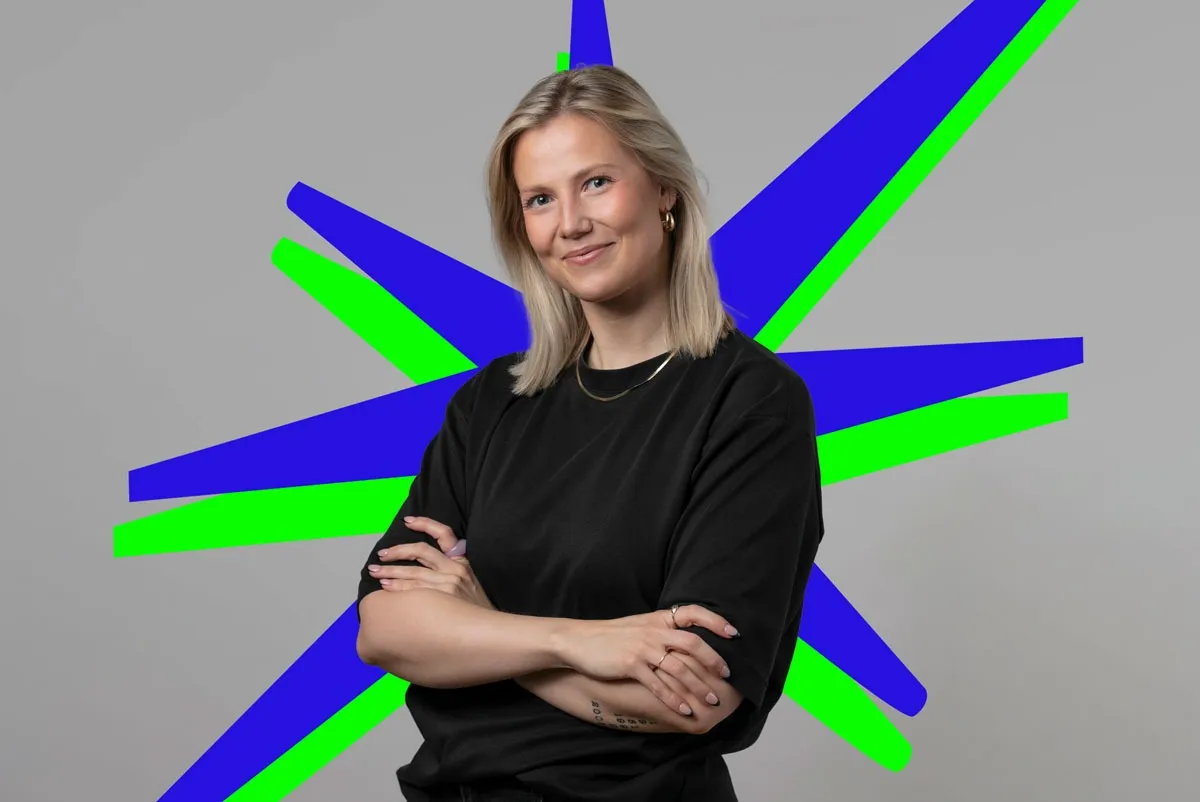
By Netta Heikkilä, CEO, change management specialist and entrepreneur
Why do we fear technology?
Psychologically, what people fear most is what challenges their fundamental ideas about themselves and about being human. In the 1970s, the debate about in vitro fertilisation and embryo research touched a nerve: our idea of humanity’s capacity to create life. In the same way, AI today touches our idea of our own humanity and worth. It challenges not just our professional identity and the way we work, but our sense of human uniqueness and intelligence.
Verity Harding examines the analogy between AI and IVF in her book “AI Needs You: How We Can Change AI’s Future and Save Our Own”. The book describes how the regulation of technological revolutions such as IVF offers lessons for governing AI. And indeed the analogy between IVF and AI technology is not far-fetched — not even in terms of the doom scenarios.
“Man must not play God”
When IVF was introduced in the late 1970s, there was uproar in Britain. The technology was feared to break fundamental moral and natural boundaries. Scientific innovations often meet resistance rooted in cultural narratives and myths. In IVF’s case too, science fiction shaped people’s ideas about the life sciences: IVF was seen as a step towards “Frankenstein’s children”. The view was that humans should not try to create life with technology and thereby play God. Even famous scientists — including James Watson, who discovered the structure of DNA, opposed IVF loudly and considered it unethical.
“Machines must not play human”
Today’s scientists likewise debate the ethical questions around AI technology. There are various concerns about AGI and self-directing agents. The rest of us, though, fear something vaguer: the superintelligence familiar from films, taking power from humans with irreversible consequences. Exactly as the Frankenstein phenomenon was feared.

With AI, the fear attaches not only to humanity and human existence but to another fundamental quality: the uniqueness of our intelligence. AI stirs a primal anxiety because it strikes directly at an uncertainty many of us already feel — the fear that we are replaceable, that the work we do or the thoughts we have don’t matter after all. When technology appears able to do the same as us or better, it shakes our self-image and deepens the fear that we are not unique or valuable. Are my intelligence, my creativity, my thinking — everything I take to be the core of myself — really just algorithms a machine can imitate?
Fear not, regulate — T. Margaret
The fears around IVF were overcome, and the doom scenarios did not come to pass, thanks to sensible regulation. A comprehensive regulatory framework harnessed IVF technology as a safe innovation that has brought happiness to millions.
Decisive here was the Warnock committee, established by Margaret Thatcher’s government, which in the early 1980s created the world’s leading regulatory framework around IVF. As well as experts, the committee listened to ordinary citizens, and recognised that fears about a technology can only be answered with openness and clear boundaries. Regulation did not stifle innovation; on the contrary, it freed it to flourish, because both researchers and society knew the rules of the game. Today, IVF technology has brought an estimated 13–17 million children into the world — millions of stories of happiness that would never have been possible had the fears prevailed.
Regulating AI in the Warnock spirit
Fear itself is not the enemy but a valuable signal that we need clear, safe rules of the game in order to face uncertainty constructively. At best, a global Warnock committee of its own will develop around EU AI regulation — one that listens to ordinary citizens and ensures we can make use of AI’s possibilities without fear.
The history of IVF offers a consoling example: when regulation is done right, it does not stifle a technology. It liberates and enables — for some, even the fulfilment of their most heartfelt wish.
The EU AI Act aims to ensure the safe and ethical use of AI in Europe. Its central goals are to protect citizens’ rights and safety and to create clear rules for the development and use of AI. In practice the act defines risk categories for AI systems and the requirements attached to them, and promotes transparency and accountability. The act entered into force on 1 August 2024. Its first requirements applied from February 2025, and full application begins in August 2026.
Enjoyed this piece? Subscribe to get notified about new Tekoälyfoorumi articles straight to your inbox. We’d also hugely appreciate it if you left us a review on Google. Thank you. 💙